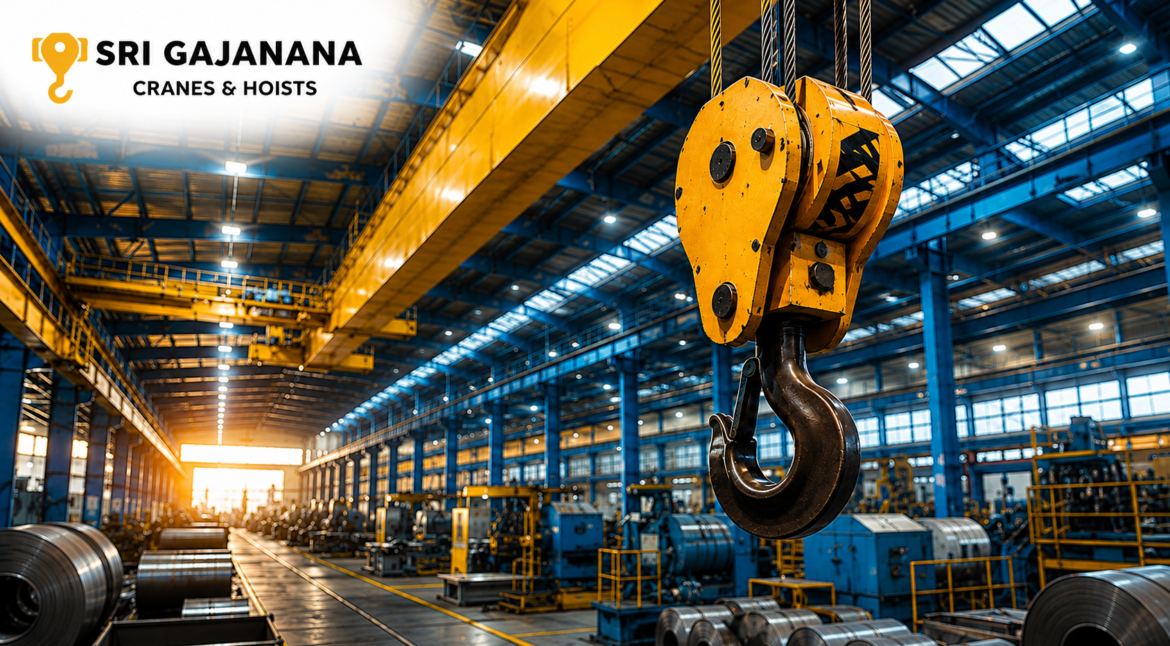
Heavy Duty Crane Maintenance is one of the most important aspects of ensuring the safety, reliability, and efficiency of industrial lifting equipment. Heavy-duty cranes operate continuously in demanding environments such as manufacturing plants, warehouses, power plants, construction sites, steel industries, and material handling facilities. Regular maintenance not only prevents unexpected breakdowns but also extends the lifespan of cranes while reducing operational costs.
Industrial cranes are designed to handle heavy loads with precision and consistency. However, prolonged usage can lead to wear and tear of critical components, affecting performance and workplace safety. A well-planned maintenance strategy ensures that heavy-duty cranes continue to perform efficiently while meeting industry safety standards.
At Sri Gajanana Cranes & Hoists, we understand the importance of maintaining industrial lifting equipment to deliver maximum productivity and operational excellence. Proper crane maintenance can significantly improve equipment reliability and minimize costly downtime for industries of all sizes.
Why Heavy Duty Crane Maintenance is Important
Heavy-duty cranes maintenance are significant investments for industrial facilities. Regular maintenance helps businesses achieve the following benefits:
- Improved workplace safety.
- Reduced machine downtime.
- Extended crane lifespan.
- Enhanced lifting performance.
- Lower repair and replacement costs.
- Compliance with industrial safety regulations.
- Improved operational efficiency.
- Better load handling capabilities.
Neglecting maintenance schedules can result in equipment failure, production losses, and serious workplace accidents. Preventive maintenance plays a vital role in minimizing these risks while ensuring smooth industrial operations.
Components That Require Regular Maintenance
Several crane components require periodic inspection and maintenance to maintain optimal performance.
1. Wire Rope Inspection
Wire ropes are among the most critical crane components. Regular inspections should include checking for:
- Broken wires
- Corrosion
- Abrasion
- Crushing damage
- Kinks and bends
- Rope diameter reduction
Damaged wire ropes must be replaced immediately to avoid operational failures and safety hazards.
2. Electric Wire Rope Hoists
Electric hoists require regular monitoring for:
- Motor performance
- Gear lubrication
- Brake system functionality
- Noise and vibration levels
- Electrical connections
- Load chain and hook condition
Maintaining hoists ensures smooth lifting operations while improving equipment longevity.
3. Crane Hooks
Hooks must be inspected for:
- Cracks
- Deformation
- Excessive wear
- Improper latch operation
- Surface damage
Even minor hook defects can compromise lifting safety and should never be ignored.
4. Gearboxes and Motors
Gearboxes are responsible for power transmission throughout crane operations. Maintenance activities include:
- Oil level inspections
- Lubrication checks
- Leakage inspections
- Temperature monitoring
- Alignment verification
Electric motors should also be periodically tested for proper functionality and efficiency.
Daily Maintenance Checklist
Industrial facilities should conduct daily crane inspections before operations begin.
Daily Checks Include:
- Visual inspection of the crane.
- Wire rope condition.
- Brake performance.
- Limit switch functionality.
- Emergency stop button operation.
- Hook and latch inspection.
- Electrical panel examination.
- Hoist functionality testing.
- Unusual noises during operation.
- Oil leakage inspections.
Daily maintenance procedures can help identify minor issues before they develop into major failures.
Weekly Crane Maintenance
Weekly inspections are equally important for maintaining operational efficiency.
Weekly Maintenance Activities
- Lubricate moving components.
- Inspect electrical systems.
- Examine wheel assemblies.
- Check gearbox performance.
- Verify load testing records.
- Inspect pendant controls.
- Check runway alignment.
- Examine warning systems.
Weekly maintenance improves crane reliability while reducing unexpected equipment failures.
Monthly Maintenance Procedures
Monthly maintenance should include more detailed inspections of critical crane systems.
Monthly Maintenance Includes:
- Electrical connection tightening.
- Brake adjustment inspections.
- Wire rope lubrication.
- Motor performance evaluation.
- Structural component inspection.
- Load testing procedures.
- Alignment verification.
- Gearbox oil replacement when necessary.
- Hoist mechanism inspections.
Industries that use cranes continuously should consider implementing advanced maintenance programs to maximize equipment performance.
Preventive Maintenance Strategies
Preventive heavy duty crane maintenance significantly reduces equipment downtime and maintenance costs.
Best Preventive Maintenance Practices
Schedule Maintenance Programs
Industries should develop comprehensive maintenance schedules based on:
- Crane usage frequency
- Operating environment
- Load capacities
- Manufacturer recommendations
- Safety regulations
Maintain Inspection Records
Documenting maintenance activities helps organizations:
- Track equipment performance.
- Identify recurring issues.
- Improve maintenance planning.
- Ensure regulatory compliance.
- Minimize unexpected failures.
Train Crane Operators
Proper operator training improves:
- Crane handling efficiency.
- Equipment lifespan.
- Workplace safety.
- Maintenance awareness.
Skilled operators are more likely to identify early warning signs of equipment problems.
Common Crane Problems
Understanding common crane issues helps industries address problems proactively.
Frequently Encountered Problems
Brake Failure
Causes include:
- Excessive wear
- Improper adjustments
- Contamination
- Electrical failures
Wire Rope Damage
Common reasons include:
- Overloading
- Improper lubrication
- Misalignment
- Environmental exposure
Electrical Issues
Electrical failures may occur due to:
- Loose connections
- Motor damage
- Overheating
- Control panel malfunctions
Excessive Vibrations
Potential causes include:
- Improper alignment
- Wheel damage
- Structural defects
- Motor issues
Timely maintenance can effectively eliminate these operational problems.
Crane Safety During Maintenance
Safety should always remain the highest priority during heavy duty crane maintenance procedures.
Safety Guidelines Include:
- Disconnect electrical power before servicing.
- Use appropriate lockout and tagout procedures.
- Wear personal protective equipment.
- Follow maintenance protocols.
- Conduct load testing after repairs.
- Ensure qualified personnel perform inspections.
- Verify operational controls before usage.
Following safety practices minimizes workplace accidents while protecting maintenance teams.
Benefits of Regular Crane Maintenance
Organizations implementing routine maintenance programs often experience significant operational improvements.
Major Benefits Include:
Reduced Downtime
Preventive maintenance helps avoid sudden equipment failures that disrupt production schedules.
Lower Maintenance Costs
Regular inspections reduce expensive repairs by identifying problems during their early stages.
Improved Productivity
Well-maintained cranes operate efficiently and consistently, improving industrial productivity.
Extended Equipment Lifespan
Proper maintenance can significantly increase crane service life while maximizing return on investment.
Enhanced Safety Standards
Regular inspections ensure compliance with industrial safety regulations while minimizing workplace risks.
Maintenance Frequency Recommendations
| Maintenance Type | Recommended Frequency |
|---|---|
| Visual Inspection | Daily |
| Lubrication | Weekly |
| Electrical Inspection | Monthly |
| Brake Inspection | Monthly |
| Wire Rope Inspection | Monthly |
| Load Testing | Periodically |
| Comprehensive Inspection | Annually |
| Preventive Maintenance | Scheduled Basis |
Industries should customize Heavy Duty Crane maintenance schedules according to crane applications and operational requirements.
Signs Your Crane Requires Immediate Maintenance
Watch for the following warning signs:
- Unusual operating noises.
- Reduced lifting capacity.
- Excessive vibrations.
- Wire rope damage.
- Brake failures.
- Electrical malfunctions.
- Uneven crane movement.
- Oil leakage.
- Structural deformation.
- Sudden performance issues.
Ignoring these symptoms can lead to equipment failure and increased repair expenses.
Industrial Applications of Heavy-Duty Cranes
Heavy-duty cranes are widely used across industries including:
- Manufacturing industries
- Steel plants
- Warehouses
- Power generation facilities
- Construction industries
- Automotive manufacturing
- Cement plants
- Logistics operations
- Material handling industries
- Infrastructure projects
Each application demands specialized Heavy Duty Crane maintenance programs based on operational requirements and environmental conditions.
Choosing Professional Crane Maintenance Services
Selecting experienced maintenance professionals ensures reliable crane performance.
Industries should consider:
- Technical expertise.
- Industry experience.
- Preventive maintenance capabilities.
- Safety compliance standards.
- Emergency service support.
- Inspection and testing facilities.
- Comprehensive maintenance programs.
Professional maintenance services help organizations achieve operational excellence while protecting valuable industrial assets.
Why Choose Sri Gajanana Cranes & Hoists?
Sri Gajanana Cranes & Hoists is committed to delivering high-quality industrial lifting and material handling solutions. With extensive industry expertise, we provide reliable crane systems designed for performance, safety, and durability.
Our solutions are engineered to meet the evolving requirements of modern industries, ensuring efficient material handling operations across multiple sectors. From heavy-duty cranes and hoists to customized industrial solutions, we prioritize quality, innovation, and customer satisfaction.
Conclusion
Heavy Duty Crane Maintenance is essential for ensuring workplace safety, improving equipment reliability, and maximizing industrial productivity. Regular inspections, preventive maintenance programs, and timely repairs significantly extend crane lifespan while minimizing operational disruptions.
By implementing proper maintenance strategies, industries can reduce downtime, improve safety standards, and optimize their investment in heavy-duty lifting equipment. A proactive maintenance approach not only enhances performance but also contributes to long-term operational success. Whether it involves daily inspections or comprehensive preventive maintenance programs, prioritizing crane maintenance remains a critical requirement for every industrial operation.
 Stay connected with us for updates, crane demos, and safety tips: