Modern industries are increasingly adopting automation to improve productivity, reduce manual handling, and manage materials more efficiently. Automated Material Handling Systems in India help factories, warehouses, manufacturing units, and distribution facilities move, store, and manage materials with greater speed and accuracy.
These systems combine mechanical equipment, automation technology, and control systems to streamline material movement and reduce unnecessary manual operations.
What Are Automated Material Handling Systems?
Automated material handling systems in india are equipment and technologies designed to automatically move, store, retrieve, and manage materials within an industrial or warehouse environment.
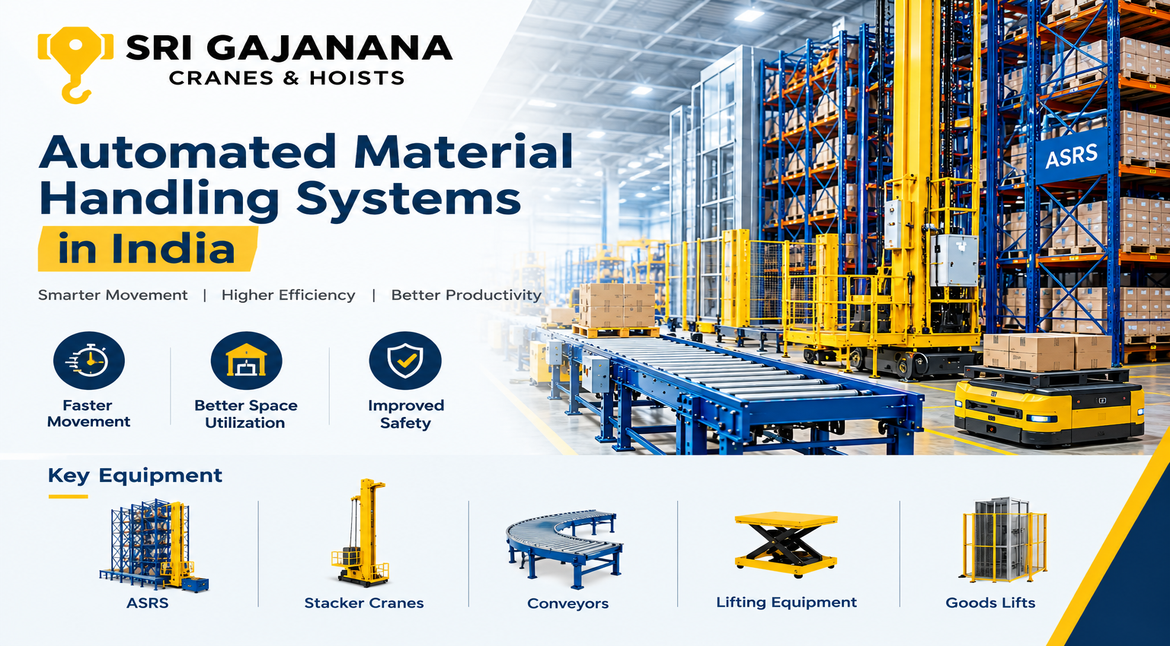
Depending on the application, these systems can include ASRS, stacker cranes, conveyors, automated lifting equipment, goods lifts, and other warehouse automation solutions.
The right system depends on factors such as material type, load capacity, storage requirements, warehouse layout, operating speed, and level of automation required.
Why Industries Need Material Handling Automation
Traditional material handling can require considerable manpower and repetitive movement of goods. Automation can help industries improve the overall material flow while reducing unnecessary manual activities.
Some major benefits include:
- Faster movement of materials
- Better utilization of warehouse space
- Reduced manual handling
- Improved operational efficiency
- Better inventory movement
- Reduced material-handling errors
- Improved workplace safety
- Consistent operation
- Reduced operational delays
For industries handling large volumes of materials, automation can become an important part of improving productivity and warehouse efficiency.
Types of Automated Material Handling Systems
1. Automated Storage and Retrieval Systems
Automated Storage and Retrieval Systems (ASRS) are designed to automatically store and retrieve materials from designated storage locations. They can be useful for warehouses and manufacturing facilities that require organized storage and efficient retrieval.
2. Stacker Cranes
Stacker cranes are automated storage and retrieval equipment used for handling loads within high-density storage areas. They can help maximize vertical storage space and improve warehouse organization.
3. Conveyor Systems
Automated conveyors transport materials between different locations within a factory or warehouse. They are commonly used for continuous movement of products, components, packages, and other materials.
4. Automated Lifting Equipment
Automated lifting solutions can assist with lifting and positioning heavy materials while reducing manual handling requirements. The appropriate equipment depends on the load, working environment, and application.
5. Goods Lifts
Goods lifts are used to move materials between different levels of a building. They can be integrated into material-handling operations where vertical movement of goods is required.
Applications of Automated Material Handling Systems In India
Automated Material Handling Systems in India are increasingly relevant across different industries, including:
- Manufacturing facilities
- Warehouses
- Automotive industries
- Engineering industries
- Steel industries
- E-commerce warehouses
- Distribution centres
- Logistics facilities
- Pharmaceutical industries
- Food processing units
- Industrial storage facilities
Automation can be particularly useful where businesses handle high material volumes or require continuous and organized material movement.
How to Choose the Right Automated Material Handling System
Before investing in an automated system, businesses should evaluate their operational requirements.
Important factors include:
Material Type: Understand the size, weight, shape, and characteristics of the materials being handled.
Load Capacity: Select equipment according to the maximum required load.
Warehouse Layout: Available floor area, building height, aisles, and storage configuration can influence the system design.
Required Speed: Determine how quickly materials need to be transported, stored, or retrieved.
Level of Automation: Decide whether partial automation or a fully automated solution is appropriate.
Future Expansion: Choose a system that can support future increases in storage capacity and material-handling requirements.
Benefits of Automated Material Handling for Warehouses
Automated systems can help warehouses make better use of available space. Vertical storage solutions such as ASRS and stacker cranes can reduce the need for large floor areas while improving organized storage.
Automation can also provide more consistent material movement and reduce dependency on repetitive manual processes. When properly designed and implemented, an automated material-handling system can contribute to improved productivity and smoother warehouse operations.
Sri Gajanana Cranes & Hoists – Material Handling Solutions
Sri Gajanana Cranes & Hoists provides industrial lifting and material-handling solutions for different applications. The company’s solutions include EOT cranes, hoists, stacker cranes, ASRS, goods lifts, conveyors, and other material-handling equipment.
With experience in industrial lifting solutions, Sri Gajanana can help businesses identify suitable equipment based on their load-handling, storage, lifting, and operational requirements.
For companies looking for Automated Material Handling Systems in India, selecting equipment based on the actual application, available space, load requirements, and desired level of automation is essential.
Conclusion
Automated Material Handling Systems in India are helping modern factories and warehouses improve material movement, storage efficiency, productivity, and operational safety. From ASRS and stacker cranes to conveyors and automated lifting equipment, businesses can select different solutions according to their specific requirements.
Choosing the right automation solution requires careful evaluation of load capacity, warehouse layout, material flow, storage requirements, and future operational needs. With the right system, industries can create a more efficient and organized material-handling environment.
Frequently Asked Questions
What are automated material handling systems?
Automated material handling systems use equipment and automation technology to move, store, retrieve, and manage materials with reduced manual intervention.
What equipment is used in automated material handling?
Common equipment includes ASRS, stacker cranes, conveyors, automated lifting systems, goods lifts, and other warehouse automation equipment.
Where are automated material handling systems used?
They are used in warehouses, manufacturing plants, logistics facilities, automotive industries, engineering units, distribution centres, and other industrial applications.
What are the benefits of material handling automation?
Automation can improve material flow, reduce manual handling, increase storage efficiency, improve productivity, and support safer industrial operations.
How do I choose an automated material handling system?
Consider material type, load capacity, warehouse layout, storage requirements, operating speed, automation level, and future expansion requirements.
 Stay connected with us for updates, crane demos, and safety tips: